Welcome to the June 2026 SCAR newsletter.
You will read more about the latest news, events, publications, and networking possibilities regarding the SCAR network.
The SCAR newsletter is prepared every six months and sent to subscribers.
The 44th SCAR Plenary Meeting will take place under the Cypriot Presidency on 3rd June 2026 in Brussels. The meeting will focus on European policy developments, the draft of the 6th SCAR Foresight Report, as well as updates from the current Cypriot and forthcoming Irish Presidencies.
There will be mandate updates from four SCAR working groups; Animal Health & Welfare, AKIS, Forest and Fish, along with a final report presentation from the new SCAR Startup & Scaleup Task Force. In addition, there will be policy updates on digitalisation and AI with reference to bioeconomy, agriculture, forestry and food systems, as well as a deep-dive on relevant Horizon Europe Partnerships and updates on Member State level initiatives relevant for SCAR.
The SCAR Foresight process is a pillar of SCAR activities and an instrument for inspiring future research and innovation (R&I). Since 2006, five Foresight Exercises have been initiated under SCAR, with results providing the basis for SCAR's advisory functions to Member States, Associated Countries and the European Commission, and promoting innovative research activities at EU level. Chaired by Elke Saggau (DE), the SCAR Foresight Task Force has been working with experts under the 6th SCAR Foresight Exercise to develop explorative scenarios built upon transition pathways, with a deep dive on natural resources, land and water. The final report is set to be launched later this year, offering forward-looking scenarios to guide research and policy in a period of mounting global challenges. RefreSCAR is providing support throughout the foresight process, from brainstorming through to communication and dissemination of the final report. Stay tuned to the SCAR website and RefreSCAR social media for further updates and the official report launch.
The SCAR Startup & Scaleup Task Force is a new short-term initiative supporting the European Commission on the better translation of R&I results into business creation, startups and scaleups across agriculture, forestry, rural areas and food systems. Co-chaired by Siobhán Jordan (Teagasc, Ireland) and Jürgen Vangeyte (ILVO, Belgium), the Task Force includes representatives from Member States, Associated Countries and the European Commission (DG RTD and DG AGRI).
Its work focuses on mapping R&I-driven startup examples, identifying barriers and enabling factors for innovation uptake, and exploring synergies between EU and national funding mechanisms. The Task Force will present their final report at the 44th SCAR Plenary Meeting, summarising key findings, identifying structural bottlenecks and offering targeted recommendations to inform EU R&I strategies.
The SCAR Protein Task Force brought its mandate to a close recently with the publication of a review of "R&I for Alternative Protein Sources towards Strategic Autonomy and Sustainability in EU Protein Production", taking stock of where European R&I stands and where it needs to go. The report covers the full value chain: breeding more resilient protein crops, improving processing technology, building fairer and more transparent supply chains, and understanding what it takes to shift consumer behaviour. It is a comprehensive analysis which reviews current production and consumption trends, analyses alternative protein research, identifies value chain challenges and opportunities, and proposes strategic recommendations aligned with EU priorities. It is a fitting legacy for the Task Force's work and a valuable resource for researchers, policymakers and stakeholders across the agri-food sector.
The report leveraged the expertise of the SCAR Protein Task Force together with insights from a Portfolio Analysis of EU-funded projects conducted by RefreSCAR experts Geert Van Royen (Flanders Research Institute for Agriculture, Fisheries and Food (ILVO), Belgium), Trine Kastrup Dalsgaard and Louise Juul (Aarhus University, Denmark) at the request of the Task Force. Their report provides an overview of existing EU-funded research on alternative proteins - including plant-based proteins, microbial proteins, insects, and cultured meat - mapping the research landscape and identifying knowledge gaps across the full value chain, from primary production and downstream processing to consumer acceptance and regulatory barriers.
The fourth and final call for expressions of interest under the SCAR-Engage Programme has officially been launched, aimed at supporting new members of SCAR Working Groups (WGs) and Task Forces (TFs) in engaging in SCAR. The deadline for individual expressions of interest is 5th June and country-level expressions of interest is 12th June 2026. The individual expression of interest is for experts interested in joining SCAR WG/TFs who may be uncertain as to how to reach their country’s SCAR Delegate. Country-level expressions of interest are the official applications to be submitted by a SCAR Plenary delegate and can include nominations of new members in up to five SCAR WG/TFs.
Under the 1st, 2nd and 3rd years of the Programme, Bulgaria, Croatia, Cyprus, Greece, Hungary, Iceland, Poland, Romania, Spain, Czech Republic and Slovakia were selected for participation. The 3rd year of the programme was recently launched at the 1st SCAR-Engage Forum on the 22-23rd April in Zadar, Croatia (more details below).
We would like to welcome new SCAR Working Group and Task Force Co-Chairs for FISH WG, SAP WG and for the new Startup & Scaleup Task Force! Please meet:
 |
| Friedrich Wilhelm Köster Co-Chair of the SCAR FISH Working Group |
Friedrich Köster is professor at the National Institute of Aquatic Resources, Technical University of Denmark, until 2025 as director, with preceding leading roles in the Danish Institute for Fisheries Research and the Institute of Marine Sciences, University of Kiel.
He has extensive experience from work in international organisations, ranging from membership of the EU delegation at NAFO Scientific Council, Danish Delegate at ICES the International Council for the Exploration of the Sea in various scientific, advisory and managerial roles, including its President. This is complemented by a long-standing membership in EFARO, the association of European Fisheries and Aquaculture Research Organisations.
Experience from global research programmes includes, e.g. GLOBEC and the Canada/EU/US BASIN initiative. Science industry cooperation included the North Sea Commission Fisheries Partnership, which developed a blueprint for the present EU Advisory Councils.
With respect to EU frameworks, involvement in a leading function stretches from FP4 to Horizon 2020, includes contributions to various CSAs on science programming, the NoE EUR-OCEANS which developed into the research network EuroMarine, ERA-NETs MariFISH and COFASP as well as Article 169/185 BONUS, successfully integrating research and innovation on EU level and contributing to the Sustainable Blue Economy Partnership.
 |
| Anke Schröder Co-Chair of the SCAR SAP Working Group |
Anke Schröder is Head of Division 322 "Livestock Husbandry and Livestock Breeding" at the Federal Ministry of Agriculture, Food and Regional Identity (BMLEH), Germany. She holds a PhD in veterinary medicine from the University of Veterinary Medicine Hannover, where she also worked as a research assistant, with a special qualification in milk hygiene.
Her career spans over two decades of experience at the intersection of food safety, animal health, and agricultural policy.
She has held positions at TMF Food Industries GmbH & Co. KG, the Lower Saxony State Office for Consumer Protection and Food Safety (LAVES), and the Federal Ministry of Food and Agriculture, where she served as an officer in veterinary matters in export and later as Officer and Deputy Head of the division on Veterinary Medicines and Pharmacologically Active Substances in Food, with a particular focus on antibiotic use and antibiotic resistance. From 2022 to 2026, she served as Head of Unit 322 "Animal Health".
 |
| Siobhán Jordan Co-Chair of the SCAR SUSU Task Force |
Siobhán Jordan is Head of Technology Transfer and Commercialisation at Teagasc, leading the Engage@Teagasc office that supports research-industry collaboration and commercialisation. With a background in biotechnology, engineering, and genetics, Siobhán champions impactful research and innovation.
Her team enables the translation of scientific outputs - including AI tools - into real-world agri-food solutions.
She plays a key role in initiatives like AgNav, a climate-smart farming platform developed with Bord Bia and ICBF. Before joining Teagasc, she was the founding Director of Interface in Scotland, forging research-industry partnerships across higher education. Siobhán is committed to research with purpose, partnerships, and sustainable impact.
 |
| Jurgen Vangeyte Co-Chair of the SCAR SUSU Task Force |
Jürgen Vangeyte is Scientific Director of the technology and food unit at ILVO (Flanders Research Institute for Agriculture, Fisheries and Food), where he leads the strategic development of digital innovation in agrifood. Holding a PhD in Bioscience Engineering, he specialises in the integration of data, AI and advanced digital technologies to support sustainable and competitive agrifood systems from farm to fork.
Jürgen has played a leading role in several high-impact European initiatives contributing to the large-scale deployment of IoT, data platforms and AI in precision and smart farming.
As an active ambassador of the European digital agrifood ecosystem, he promotes user-centric innovation, with strong attention to farmer needs, business value and regulatory alignment. Under his leadership, ILVO developed DjustConnect, a pioneering regional agricultural data space initiative, and supports a Smart Farming Digital Innovation Hub and a European Network of Living Labs (ENoLL)-recognised Living Lab.
This Living Lab has evolved into a Testing and Experimentation Facility for AI and robotics in agrifood, providing services to companies to support the validation, scaling, and market readiness of innovative solutions. Building on these developments, he coordinates the Common European Agricultural Data Space (CEADS), contributing directly to the implementation of the EU Data Strategy in the agrifood domain. In addition, he is actively engaged in European partnerships on agricultural data and agroecology, and in the establishment of the European Digital Infrastructure Consortium in Agri-Food (EDIC4AgriFood), strengthening long-term digital infrastructure and governance for the agrifood sector.
The SCAR Working Groups (WGs) and Task Forces (TFs) form an inspiring network of motivated peers. They offer unique platforms to develop R&I agendas, co-construct European R&I partnerships, and exchange experiences and best practices. There are currently nine SCAR Working Groups: Agroecology (AE), Animal Health and Welfare (AHW), Agricultural Knowledge and Innovation systems (AKIS), European Agricultural Research towards greater impact on global Challenges (ARCH), Bioeconomy (BSW), Fisheries and Aquaculture Research (FISH), Food Systems (FS), Forest and Forestry Research and Innovation (FOREST), and Sustainable Animal Production (SAP). In addition, there are two Task Forces: the Start-up and Scale-up Task Force and the Foresight Task Force. The Protein Task Force recently concluded its mandate.
The Agroecology WG held their first meeting of 2026 online on January 21st. The Group subsequently defined their Terms of Reference for an upcoming RefreSCAR study titled ‘Priorities and trajectories across countries to engage in agroecology: global vision and country specificities’ which is due to start later this summer. The Group held another online meeting on 29th May where they discussed plans for a further RefreSCAR study and portfolio analysis, and started preparations for their next in-person meeting in autumn 2026.
The AHW WG recently held their Plenary meeting back-to-back with the EUPAHW meeting in Tallinn, Estonia on 23rd April. Updates were given from the subgroups on Animal Welfare and the Strategy & Foresight Unit. The WG has a number of activities ongoing, including two studies in collaboration with RefreSCAR on ‘Regulatory Science for Animal Welfare’ and ‘Risk Communication’, along with a subgroup investigating the impacts of climate change on animal health and welfare.
In addition, the meeting provided updates from DISCONTOOLS and STAR-IDAZ.
The SCAR AKIS WG held an online meeting earlier this year on 4th March and most recently met in-person in The Hague, NL on 27–28th May. The meeting in The Hague included updates from the European Commission, as well as presentations on Living Labs, modernAKIS, ATTRACTISS, and NUTRI-KNOW. They also had a dedicated session on “Connecting AKIS to Food Systems” which featured a presentation from the SCAR Food Systems WG. Participants additionally had the opportunity to visit the Field Lab Peatland and an EIP project on cranberries. The meeting concluded with an overview of the group’s next mandate and a recap of its current 6th mandate, which will run until June 2026. The group is also preparing an extensive 6th mandate report, which is expected to be published this summer.
The SCAR ARCH group recently published a Policy Brief titled ‘Lessons learned from 10 years of EU-funded international R&I partnerships to foster the sustainability of globally connected agri-food systems. The brief built on their previously published Portfolio Analysis undertaken by RefreSCAR experts examining 15 EU-funded R&I projects aimed at fostering sustainable agri-food systems beyond the EU, through international partnerships, particularly with low- and middle-income countries.
The group also collaborated with the SCAR Bioeconomy and Forest WGs in hosting a two-day online workshop on the poly-crisis in March.
The group’s next meeting will take place in Brussels on 2nd June.
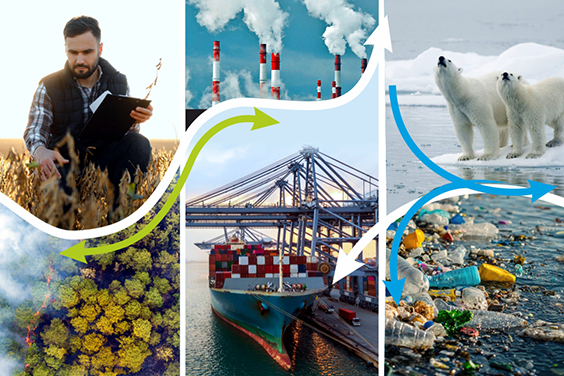
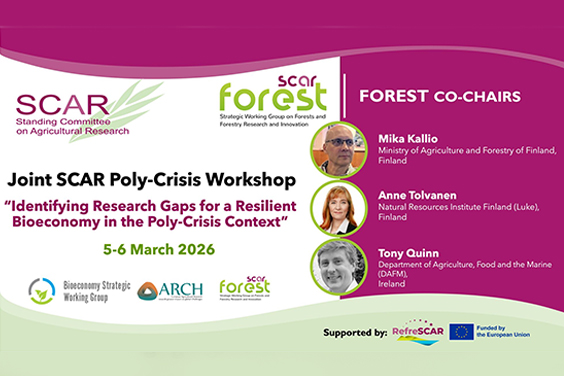
The Bioeconomy WG recently hosted a dynamic online co-creation workshop titled 'Identifying Research Gaps for a Resilient Bioeconomy in the Context of Poly-Crisis', on 5th & 6th March in collaboration with the SCAR Forest and ARCH WGs.
The workshop brought together experts, policymakers, and stakeholders to explore how bioeconomy systems can better respond to complex and interconnected global challenges. The event fostered dialogue, identified critical knowledge gaps, and highlighted research and innovation pathways that could strengthen resilience in the face of multiple, simultaneous crises.
The group will publish the results from the workshop as a Policy Brief.
The 54th SCAR Fish meeting took place online on 12th March with their newly nominated co-chair Friedrich Wilhelm Koster from the National Institute of Aquatic Resources, Denmark. They will have their 55th meeting in Brussels on 4th June. During this meeting, discussions will focus on the newly proposed mandate and on comments elicited during the 44th SCAR Plenary.
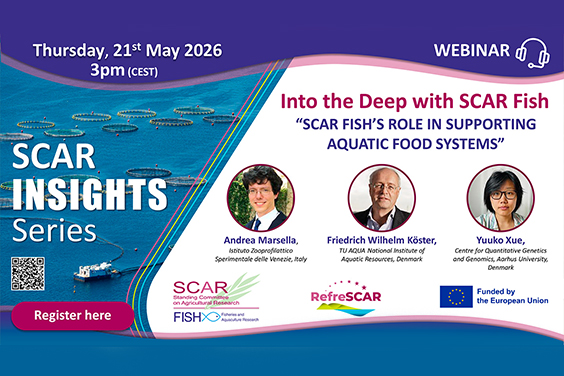
SCAR Fish also recently hosted a webinar as part of the ‘SCAR Insights’ series to showcase the ongoing work of their group, including a presentation by expert Yuuko Xue on the ongoing RefreSCAR portfolio analysis titled ‘Mapping of the research efforts deployed on farmed aquatic animals in Europe’. The webinar was recorded and can be viewed here.
The SCAR Food Systems WG hosted an online meeting on 17th April, during which a dedicated SCAR FS WG sub-group Task Force presented a policy paper as input to the European Commission’s Strategic Research and Innovation Agenda on Food Systems (FOOD2040), which is expected to be published shortly. The meeting also provided an opportunity to discuss plans and proposed topics for the fourth mandate, which will begin in 2027.
Two reports, supported by RefreSCAR, on Food Systems Resilience and the Food Systems Transition are currently being finalised and will be available on the SCAR website soon.
The group will meet next in Bari, Italy on 18th June 2026, back-to-back with the FutureFoodS Governing Board meeting.
The SCAR Forest WG held an online meeting on 19th March where updates were provided on ongoing activities, including the upcoming European Partnership on Forests and Forestry for a Sustainable Future. SCAR Forest has served as an important strategic and co-creation platform supporting the mobilisation and coordination of European countries and the development of the Partnership. In spring 2026, the European Commission formally notified the consortium that the Grant Agreement was ready for signature, with the Partnership expected to officially commence on 1 June 2026. The group also continues to support information exchange and coordination activities linked to the Partnership, including preparations for the official launch event scheduled for 13–14 October 2026 in Helsinki, Finland.
The group also recently contributed to a two-day online workshop on poly-crisis challenges and resilience perspectives across the forest and bioeconomy sectors, organised jointly with the SCAR Bioeconomy and ARCH WGs.
The SCAR Sustainable Animal Production group hosted a highly productive and engaging workshop at Aarhus University in Denmark on 17-18th December 2025, focused on key developments in sustainable agri-food and livestock systems.
The packed agenda featured a wide range of insightful updates and presentations, including Policy updates from the European Commission, an update on the RefreSCAR study on the sustainability of livestock farming systems, updates from the SCAR Food Systems, AHW and Agroecology WG Chairs, presentations on Denmark’s Green Tripartite and much more. A trip to Foulum Research Centre followed the workshop, where members got an overview of their biorefinery, livestock and biogas research. The next SAP workshop is scheduled for Dublin, Ireland from 29-30th September.
The group also recently updated their webpage on the SCAR website, see their new page here.
The SCAR Foresight Task Force is taking decisive steps towards its next major milestone: the publication of the 6th SCAR Foresight Report. The Task Force has been working with experts from the Foresight on Demand group to develop explorative scenarios for the agri-food sector and wider bioeconomy from 2025 to 2050.
In collaboration with RefreSCAR, the Task Force is currently developing the communication and dissemination strategy for the Foresight Report. With the support of RefreSCAR the Task Force aims to share the findings and recommendations of the upcoming Foresight Report with policymakers, the scientific community, and other relevant stakeholders in a clear and impactful way.
The SCAR Protein Task Force brought its mandate to a close recently following some very active months. The group supported the 1st RefreSCAR Hackathon that took place in Vienna in November 2025 with two of its members (Pablo Gómez and Laura Hundscheid) acting as judges for the proposed creative innovations on the topic of ‘Protein Value Chains: Global demand, Local challenges’.
In February, represented by its co-chairs (Adeline Boire and Pablo Gómez), the TF participated in a Strategic Dialogue event organized by the European Science Alliance for Agriculture and Food (ESAAF) at the European Parliament on the topic: “Diversifying Proteins for Sustainable Food Systems and Farmers”, anticipating the results of its Policy Review and Analysis report.
Two documents presenting TF’s final outcomes were subsequently published and are currently available on the SCAR website: - "Portfolio Analysis Report" and "R&I for alternative protein sources: towards strategic autonomy and sustainability in EU protein production".
The new Startup and Scaleup Task Force, which began its mandate in January 2026, is a short-term initiative supporting the European Commission on the better valorisation of research and innovation ideas into business creation, startups and scaleups in agriculture, forestry, rural areas and food systems.
The group has had numerous online meetings since their launch and also carried out a survey of SCAR member countries to better understand how research and innovation results are translated into business creation and market deployment, and to identify the conditions that support startups, scaleups and innovative SMEs across Europe.
The group’s findings will be presented at the 44th SCAR Plenary meeting and published on their webpage.
The FutureFoodS partnership is proud to announce the joint kick-off meeting of its first joint transnational co-funded call’s selected research projects. This event will take place on the 17th of June from 2 to 5:30 PM CEST at the CIHEAM Bari in Bari, Italy, as part of FutureFoodS’s fifth Governing board. 23 projects will be invited to present their methods and goals on a broad variety of food systems-related topics, ranging from the development of algae-based burgers to the mitigation of harmful marketing or the improvement of supply chains’ resilience against security shocks. All are welcome to follow the kick-off meeting by registering online via the following link ...
An international study visit was organised by InLife Institute of Animal Reproduction and Food Research on 26-27th February to Olsztyn, Poland, as part of FutureFoodS. The event gathered partners and representatives of Food Systems Living Labs from across Europe to exchange experiences and demonstrate practical co-creation models, where academia, society, business and public administration jointly design and test solutions for the transformation of food systems. A video recap of the event can be viewed here.
Earlier this year the Partnership also conducted three stakeholder workshops in Bulgaria, Germany and Italy to identify the most important challenges regarding the future of sustainable food systems. The three countries were selected to represent regional dynamics and differences of the food system within Europe, and stakeholders from different fields of the food systems were invited including policy makers, scientific researchers/experts, interest groups, and the private sector. The results from these workshops will be published later this year.
FutureFoodS also hosted a webinar series this Spring on ‘Science advise to Policymakers’. Webinar 1 was on ‘Principles and practices of SPI in different contexts’ with outputs feeding into Webinar 2 on ‘Science–policy–society interface in food policy: Towards institutional and territorial coherence’ which subsequently shaped the content and scope of Webinar 3 on ‘Development of widely shared typology and practice-oriented guidelines for SPI in FutureFoodS’.
The 2nd EUP AH&W co-funded call for proposals on ‘Shaping the Future of Animal Health and Welfare’ closed in March 2026 with a total of 106 pre-proposals received. At this stage, the third call is planned for January 2027.
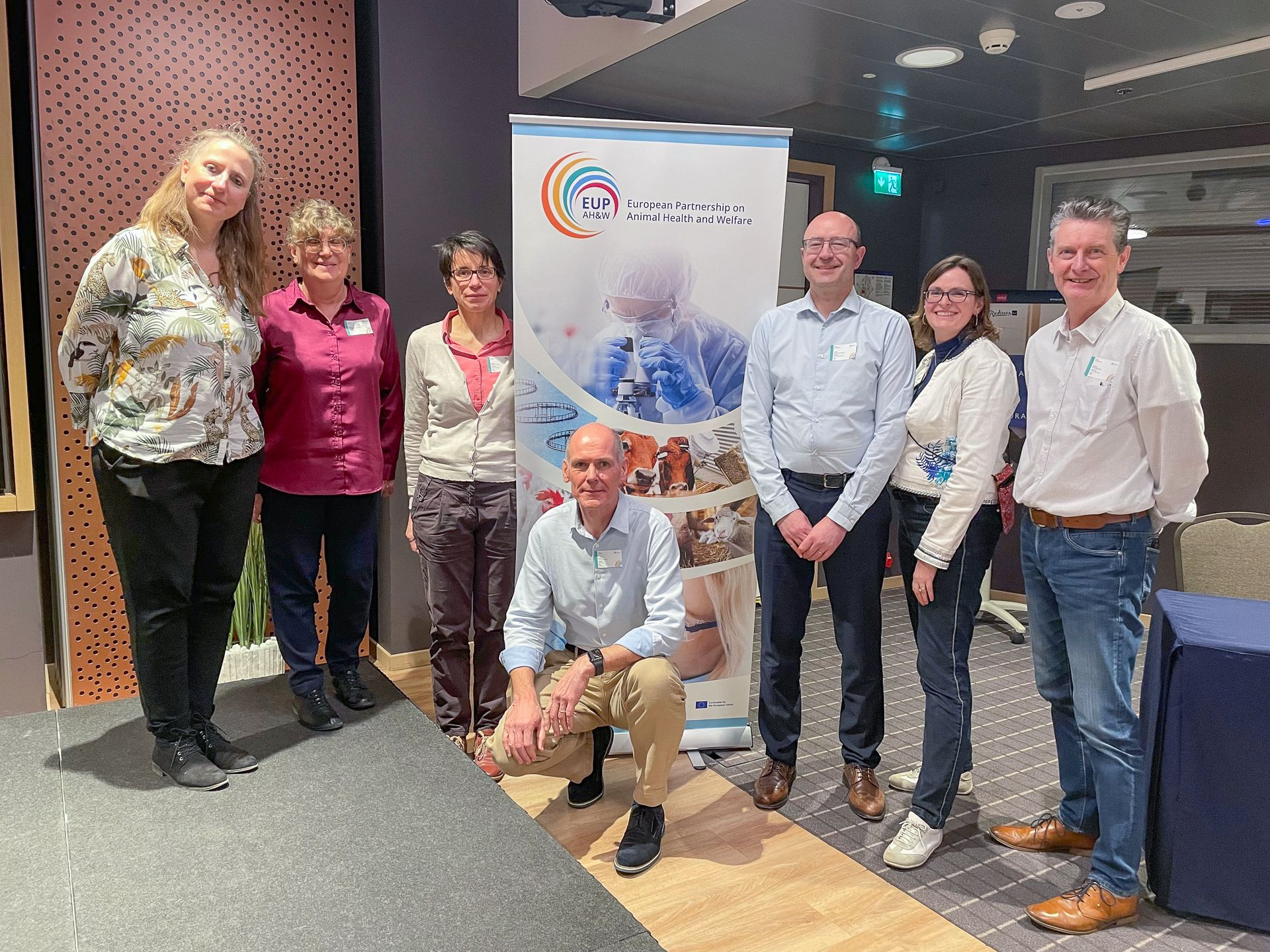
On 21–22 April 2026, EUP AH&W successfully organised its Second Scientific Workshop in Tallinn, Estonia. The workshop served as a kick-off for the second round of internal projects and aimed to share knowledge, strengthen collaboration, and explore synergies within and between projects.
An updated EUP AH&W Strategic Research and Innovation Agenda (SRIA) will be published in summer 2026. The SRIA was originally developed through joint working of the EUP AH&W, WP6 – ERA-Net Co-fund ICRAD, STAR-IDAZ IRC and the SCAR AHW WG through extensive consultation with a broad range of players. The updated SRIA will describe the long-term strategic vision of the Partnership, including the broad research themes that will guide the Partnership’s activities over the coming years.
The 1st EUP AH&W Scientific Conference on Animal Health & Welfare has been announced and will be held at the University of Milan, Italy, from 19th- 22nd January 2027. Abstract submissions will be open from early June to the end of August 2026 (check the Conference webpage). Abstracts are invited from a wide range of topics linked to animal health and welfare.
The first stage in the 3rd co-funded call under the Agroecology Partnership closed in February with the deadline for full proposals on the 8th July 2026 under the theme of ‘Fostering plant and animal genetic diversity and empowering farmers to accelerate the agroecological transition’. The European Commission and 28 funders from 20 different countries provided funds to this call.
The common Kick-off Meeting of the 19 projects selected for funding in the 2nd co-funded call took place in Bordeaux, France (11th-13th of May). Besides introducing the 19 projects, workshops on value chains and on performance of agroecology were held, as well as a round table to discuss the values of living labs for the agroecology transition.
The Partnership also launched a Call for interest to join its Enlarged Stakeholder Board (ESB). This gives an opportunity to get involved in the Partnership and contribute to the agroecology transition in Europe and beyond. The ESB is organised into 7 thematic colleges, representing a broad range of relevant stakeholders. Interested organisations are invited to join the ESB by completing an online form available here.
The partnership also recently launched a new podcast titled ‘Agroecology Bites’ exploring the ideas, people and practices shaping the future of food and farming. The first episode is now live across podcast streaming platforms and explores the concept of agroecology in a clear and accessible way: what it really means, why it matters for farmers and consumers alike, and how it connects to the food on our plates.
The 2nd Summer School in Agroecology was held in Elvas, Portugal (27th-29th of April) on the topic of ‘Agroecology: Conservation Agriculture in Mediterranean Systems in a Climate Change Scenario’. 20 participants from 8 different countries benefitted from an immersive experience combining expert-led lectures, practice focused discussions and hands-on farm visits.
The European Partnership Agriculture of Data (AgData) aims to bring together research centres, funders and national authorities from EU Member States and Associated Countries to accelerate the digital transformation of European agriculture. It is set to operate for at least seven years with a planned budget of €300 million, with 30% co-funding from the EU.
This major Horizon Europe research and innovation initiative is designed to advance sustainable agriculture, policy monitoring and evaluation through digital transformation. By improving access to and usability of environmental, Earth-observation and other key datasets, it aims to create data-driven solutions that can be reused across both public and private sectors, ensuring rapid uptake and wide impact.
The 1st call on ‘EU-wide data-driven solutions to real problems’ under the AgData Partnership closed in January and evaluations are currently underway. On 5th February, the Partnership hosted a live onboarding webinar for over 100 nationally funded Use Case projects. The webinar was recorded and provides an overview of the AgData Partnership, essential guidance and answers to common questions, supporting the Use Case projects. It can be viewed here.
The partnership has also opened a Stakeholder registration form to facilitate communication, cooperation and exchange between stakeholders in the agri-data ecosystem. More information on registering can be found here.
In January, beneficiary organisations of the proposal for a European Partnership on Forests and Forestry for a Sustainable Future were invited into Grant Agreement Preparation by the European Commission, which was signed in May.
The official start date of the Partnership will be 1 June 2026 with a launch event planned to take place on the 13-14th October in Helsinki, Finland.

Conference: Boosting generational renewal in EU agriculture – improving access to finance for young farmers
The Conference, co-organised by the Commission and the European Investment Bank, will advance the Commission’s Strategy for Generational Renewal in Agriculture and support ongoing work to develop innovative financial and advisory solutions for the sector.
Discussions will centre on improving access to finance for young farmers, with practical insights on CAP and its financial instruments for young farmers, national schemes for land investment and public guarantees, young farmers' development programmes, banks' co-investment models with young farmers as well as blended finance and advisory support, alongside high level dialogue and valuable networking opportunities.
Click here for more information about the conference. | Registration is open until June 10, 2026.
| 18-19 June 2026 | Warsaw, Poland |

Save the date: Mission Soil Investment Forum
The Mission Soil Investment Forum 2026 will gather investors, policymakers, financial institutions, researchers and key stakeholders to discuss soil health investment opportunities, co-design innovative investment mechanisms and build strategic partnerships for transition to healthy soils.
| 30 June 2026 | Brussels and online |
AgriResearch Conference
The objective of the Conference is to present the new strategic approach to EU-funded agricultural, forestry and rural R&I. The Conference will provide a space for reflections with stakeholders for the identification of priority research and innovation needs in these areas, to be addressed under the next EU Research and Innovation Programme 2028-2033 and the future European Competitiveness Fund. Registrations will open soon.
| 24-25 September 2026 | Brussels, Belgium |
|
Global Bioeconomy Summit 2026 The Global Bioeconomy Summit 2026, hosted in Dublin, will convene leaders from policy, science, industry, and civil society to explore how the bioeconomy can be scaled as a force for change. The Summit will highlight how bio-based solutions address pressing global crises, ranging from food and energy security to health, biodiversity loss, and climate resilience, while ensuring that their deployment is inclusive, equitable, and socially accepted. The Summit is being organised by the International Advisory Council on Global Bioeconomy (IACGB) in collaboration with the Government of Ireland.
|
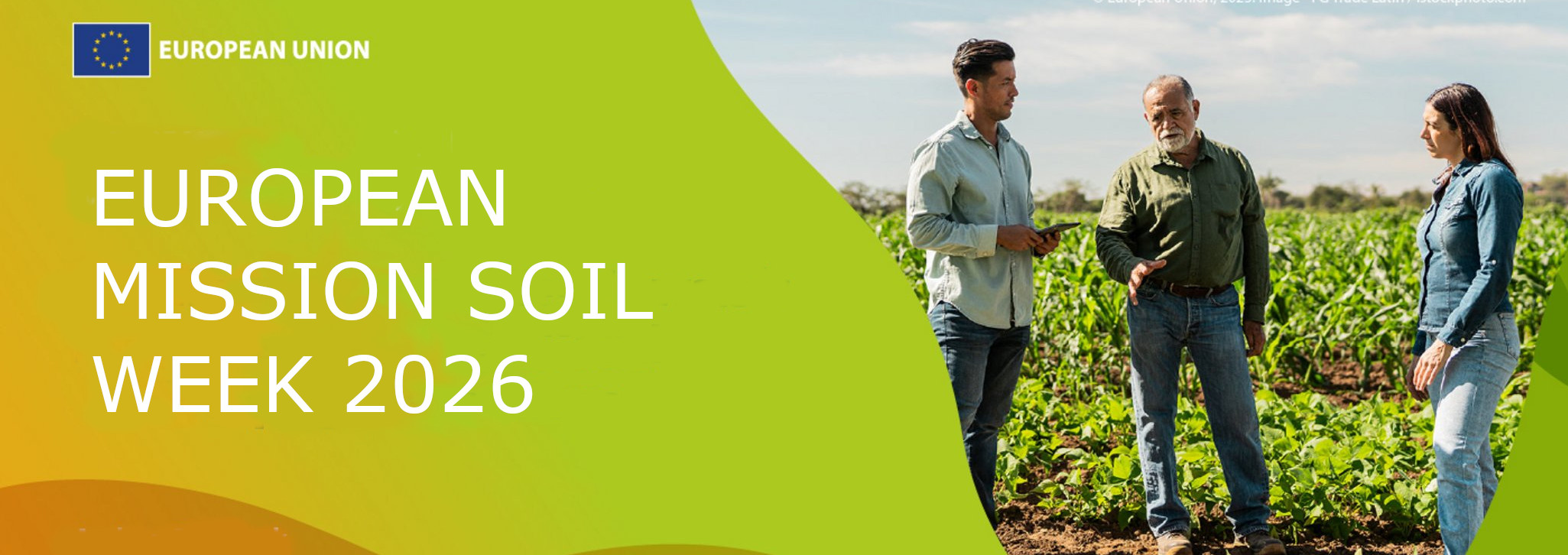
European Mission Soil Week 2026
The fourth edition of the European Mission Soil Week will take place in Ireland, under the auspices of the Irish Presidency of the Council of the EU. The event will bring together policymakers, researchers, farmers, land managers, financial institutions, businesses, philanthropic organisations and citizens, to share knowledge and explore challenges and solutions for sustainable soil management. Through sessions, exhibition stands and networking, it will foster collaboration, large-scale innovation and promote the implementation of the Mission Soil across Europe.
| 17-18 November 2026 | Dublin, Ireland |

On 16 December, the Commission adopted a Health Package, including the EU Cardiovascular Health Plan, the Biotech Act and the Omnibus on Food and Feed simplification, supporting innovation and market access while maintaining a high level of consumer health and safety. These measures will strengthen prevention, innovation and competitiveness across the health, agri-food, and life sciences sectors.
On 8 March, the Commission launched the Platform Women in farming in the EU. Serving as a forum to discuss and exchange good practices, its members will be able to set change in motion to strengthen women's engagement and equal opportunities in agriculture.
On 19 May, the Commission adopted the Fertiliser Action Plan to support farmers facing rising fertiliser costs and scarcity, reinforce domestic production and reduce Europe's dependency on imports. The Plan combines immediate support measures aimed at supporting affordability and security of supply, with longer-term action to strengthen domestic fertiliser production, improve supply resilience and accelerate the transition to bio-based, low-carbon and circular fertilisers.
The European Commission launched a call to gather views on the potential for industrial biotechnology and biomanufacturing in the EU. Companies, professionals, experts, academics and citizens are invited to share the main challenges and bottlenecks they encounter and suggestions to address them. The feedback will support the preparation of the Commission's proposal for Biotech Act II, an important element of the Commission work programme 2026, complementing other initiatives in this area, in particular the Bioeconomy Strategy and Biotech Act I. The Bioeconomy Strategy is followed by legislative proposals, with Biotech Act I focusing on health already published, Biotech Act II will follow this year.
The Biotech Act II proposal aims to create an enabling environment for EU industrial biotechnology and biomanufacturing to build a strong business case. This may include generating demand in lead markets and improving predictability for investors to encourage financial commitments within the EU.
The call for evidence is open until 10 June 2026. More information, including details on how to participate, is available on the ‘Have Your Say' portal.
A new call for research proposals has just been launched under Horizon Europe Cluster 6. It makes available up to €210 million for innovative research in biodiversity and ecosystem services, circular economy and bioeconomy, and clean environment and zero pollution. Consult the resources from the Cluster 6 Info Days for tips on successful proposals and submit your application by 17 September 2026.
The EU-funded PRIMARY project has launched a call for proposals offering €900,000 in total for projects on validation, adaptation and scaling up innovative processes for agricultural feedstock valorisation across Europe. Eligible applicants include consortia with at least one technical partner and one partner from a public body or the private sector. Apply by 8 June 2026.

In February, the European Commission hosted an on-line workshop to discuss R&I strategic approaches related to the agri-food system.
The workshop had over 70 participants of the Standing Committee on Agricultural Research (SCAR), including SCAR delegates, SCAR working group chairs and co-chairs, and the European Commission.
A summary of the workshop has now been published and can be viewed here.
 Future-proofing EU agri-food through research and innovation - Summary of results of the open consultation. This report presents the results of the open consultation carried out in support of the preparation of the new EU strategic approach to research and innovation for competitive, resilient and sustainable agriculture, forestry and rural areas. It outlines stakeholder feedback on key challenges, opportunities and priority areas for research and innovation, with a particular focus on strengthening the uptake of knowledge and innovation by farmers, foresters and rural actors, and on improving the pathway from research to start-ups and scale-ups. The new EU strategic approach will provide an updated, inclusive and actionable framework to support competitive, resilient and sustainable agri-food systems, forests and rural communities across the Union, contributing to the objectives of the Vision for Agriculture and Food.
 New Policy Brief from the European Commission, presents key findings and recommendations from five Horizon Europe projects that have been working on advancing gender equality in agriculture and rural areas: Advancing gender equality in agriculture and rural areas - Publications Office of the EU.
New Policy Briefs and report from the Danish EU Presidency Conference on Food Systems and Biodiversity Governance.
Last December, the Danish EU Presidency, with the support of the European Commission, hosted a high-level Conference on Transformative Governance for Food Systems and Biodiversity. Three recent publications capture the conference’s main outcomes and translate them into practical guidance for action:
New reports from the European Commission:
The first SCAR-Engage Forum was held on 22–23 April in Zadar, Croatia and co-located with the Annual BIOEAST Bioeconomy Conference 2026 and Bioeconomy Week.
The event marked a key milestone for the SCAR community, bringing together participants from 11 countries, including new SCAR Working Group/Task Force members, SCAR Plenary delegates, experienced SCAR experts and participants from the first two SCAR-Engage Programmes. The event also celebrated the official launch of the 3rd year of the SCAR-Engage Programme.
The agenda featured contributions from representatives of the European Commission and the Forum host, University of Zadar, as well as presentations on RefreSCAR and the SCAR-Engage Programme. Insights from long-standing SCAR members further enriched discussions, highlighting pathways for effective participation in SCAR.
A strong interest in continued collaboration emerged from the event, with participants expressing the importance of sustaining exchanges through future in-person meetings. Co-location with the Annual BIOEAST Bioeconomy Conference 2026 further broadened the Forum’s reach, particularly across Central and Eastern Europe.
The RefreSCAR project will organise its 3rd Policy Workshop on the 2nd June 2026 in Brussels, bringing together representatives of SCAR Working Groups and Task Forces (WG/TFs) and European Commission services, to discuss how SCAR WG/TFs can strengthen their contribution to EU policymaking in an increasingly dynamic and complex environment.
Hosted at the European Commission CDMA building, the half-day workshop entitled “Enhancing the impact of SCAR WG/TFs to EU Policymaking and evolving challenges” will focus on the adaptability and resilience of SCAR WG/TFs in response to political, economic, environmental and social developments affecting the agri-food and bioeconomy sectors.
The event builds on the outcomes of two previous RefreSCAR policy workshops and surveys among SCAR WG/TF members, which identified several key needs for strengthening the science-to-policy interface within SCAR. The workshop is expected to contribute to stronger coordination and cooperation across SCAR structures, improve policy responsiveness, and support more effective evidence-based policymaking at EU level. It also reflects RefreSCAR’s broader mission to reinforce the strategic role of SCAR WG/TFs within the evolving European Research Area and Horizon Europe policy context.
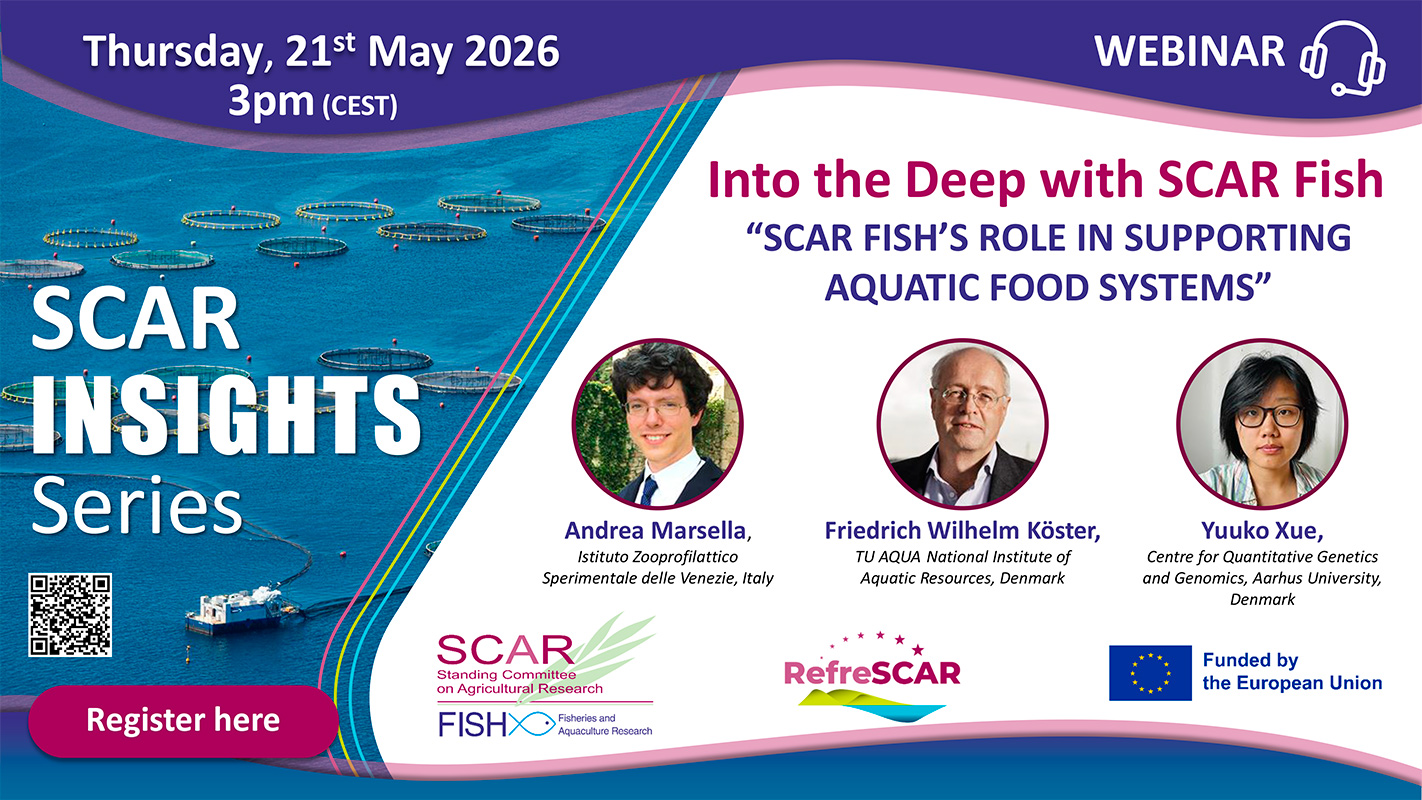
The SCAR Insights series continued to bring SCAR's Working Groups and Task Forces closer to the broader research and policy community, with the SCAR Fish Working Group taking centre stage in the latest edition, held on 21 May.
Co-chaired by Andrea Marsella and Friedrich Wilhelm Köster, the Working Group shared an overview of its ongoing initiatives and areas of active cooperation, alongside a dedicated presentation by Yuuko Xue on the mapping of research efforts deployed on farmed aquatic animals across Europe. The session also opened space for discussion on future priorities and collaboration opportunities within the aquatic research community.
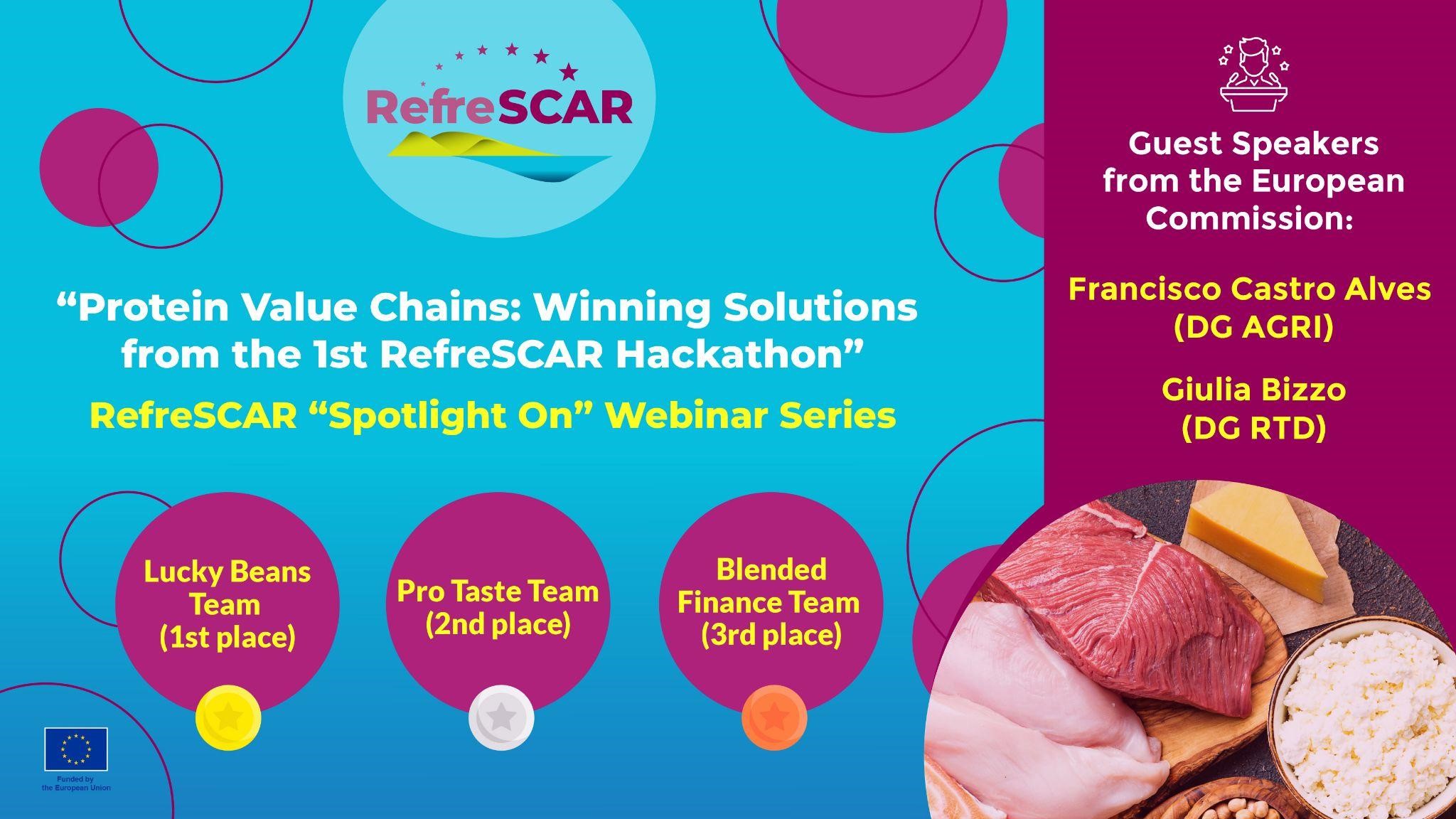
On the 28th January, more than 65 attendees tuned in to hear the suggested solutions from the three winning teams of the 1st RefreSCAR Hackathon:
The three teams illustrated respectively: (I) a cooperative framework for converting Irish faba beans into food-grade protein ingredients using dry fractionation and thermal treatments; (II) a predictive model for the functional and nutritional properties of protein hydrolysates and (III) the development of an enhanced blended finance model across the agri-food chain.
| 27-28 May 2026 | SCAR AKIS meeting | Netherlands |
| 28 May 2026 | SCAR Sustainable Animal Production meeting | Online |
| 29 May 2026 | SCAR Agroecology meeting | Online |
| 29 May 2026 | Spotlight On Webinar ‘Healthy Soils for Europe: Research, Policy and Living Lab Innovations for Sustainable Land Management’ |
Online |
| 2 June 2026 | SCAR ARCH meeting | Brussels, Belgium |
| 2 June 2026 | 3rd RefreSCAR Policy Workshop | Brussels, Belgium |
| 3 June 2026 | 44th SCAR Plenary | Brussels, Belgium |
| 4 June 2026 | SCAR Fish meeting | Brussels, Belgium |
| 8 June 2026 | SCAR 3rd Annual Training Webinar | Online |
| 8 June 2026 | 11th Forum of SCAR Working Group & Task Force Chairs meeting | Online |
| 18 June 2026 | SCAR Food Systems Meeting | Bari, Italy |
| 18-19 June 2026 | Conference: Boosting generational renewal in EU agriculture – improving access to finance for young farmers |
Warsaw, Poland |
| 30 June 2026 | Mission Soil Investment Forum |
Brussels and online |
| 24-25 September 2026 | EU AgriResearch Conference | Brussels and online |
| 29-30 September 2026 | SCAR Sustainable Animal Production Workshop | Dublin, Ireland |
| 20-21 October 2026 | Global Bioeconomy Summit |
Dublin, Ireland |
| 17-18 November 2026 | European Soil Mission week | Dublin, Ireland |
The European Commission is not responsible for the content of this newsletter.